GE Healthcare MAC 2000
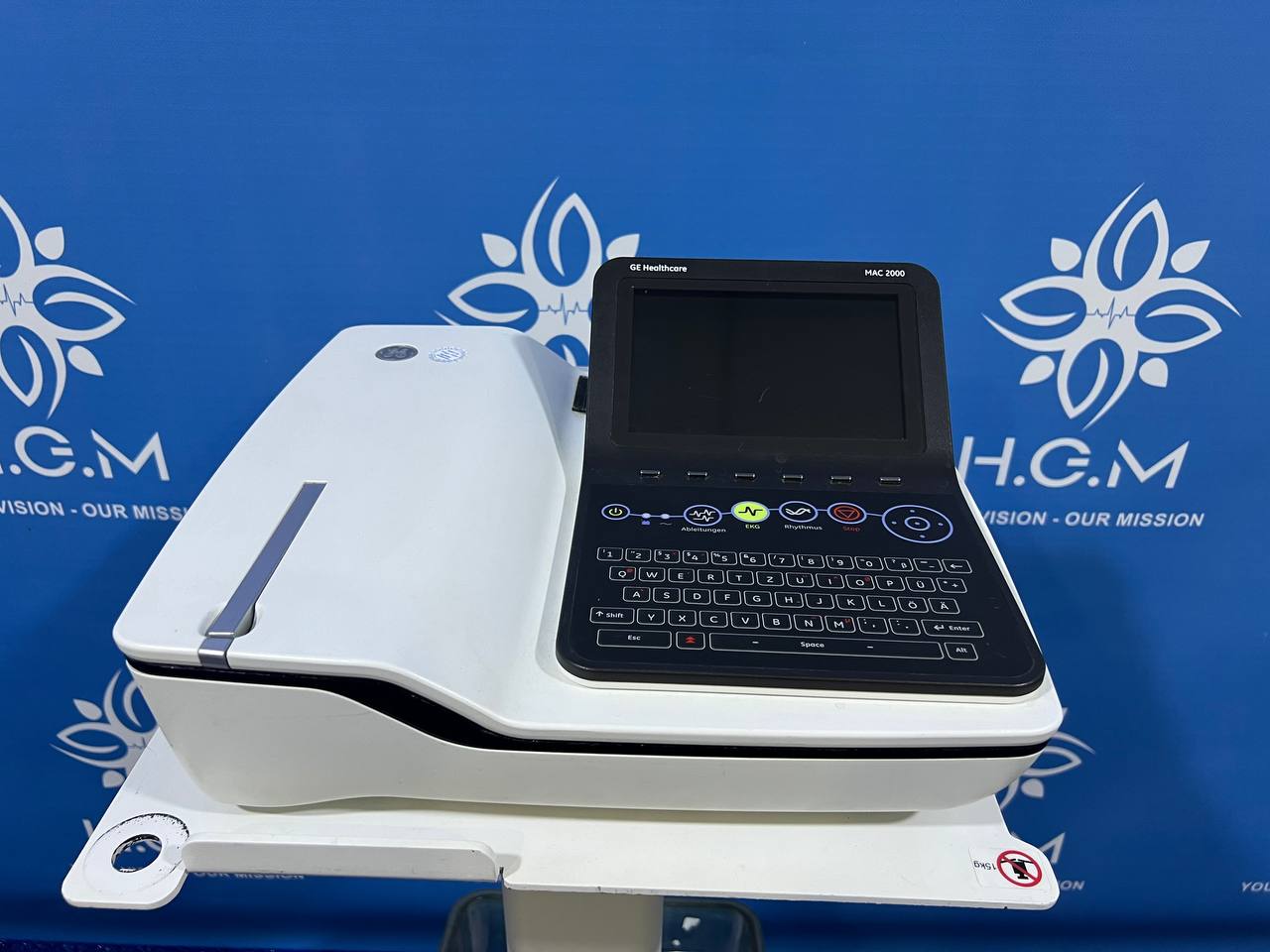
he GE Healthcare MAC 2000 is a well-known and widely used resting electrocardiograph (ECG or EKG) device. It was a workhorse in clinical settings for many years, known for its reliability, durability, and straightforward operation. While newer models have since replaced it, many are still in use around the world.
Overview and Key Features
The MAC 2000 is a 12-lead resting ECG machine designed for routine diagnostic testing. Its primary purpose is to capture the electrical activity of the heart from multiple angles and print a clear, clinical-grade report.
Key Characteristics:
12-Lead ECG: Standard 10 electrodes (on limbs and chest) to produce the 12 electrical views of the heart.
Thermal Array Printer: Uses heat-sensitive paper to produce high-resolution, crisp tracings and alphanumeric text.
Interpretive Analysis: One of its main features is the built-in Marquette 12SL Algorithm, a sophisticated and clinically validated program that provides automated measurements and interpretive statements. This helps physicians by flagging potential abnormalities like arrhythmias, conduction defects, and ischemic changes.
Durability: Known for a robust design that could withstand the rigors of daily use in busy hospitals, clinics, and doctor's offices.
Simple Interface: Features a straightforward keypad and display for easy operation by clinicians and technicians.
Common Applications
The MAC 2000 was used anywhere a standard resting ECG was needed:
Hospitals (inpatient and outpatient)
Cardiology and Primary Care Clinics
Emergency Departments
Pre-operative screening
Routine physical exams and cardiac health assessments
Typical Components and Setup
A standard MAC 2000 setup includes:
Main Unit: The device itself with the display, keypad, and printer.
Patient Cable: A 10-wire cable that connects the patient electrodes to the machine.
Limb Electrodes (4): Clips for the arms and legs.
Chest Electrodes (6): Suction bulbs for the standard V1-V6 positions on the chest.
Power Cord & Battery: Could be used plugged in or on its internal battery for portability.
Thermal Paper: The roll of paper used for printing the ECG report.
Strengths and Advantages (Why it was so popular)
Proven Reliability: It had a reputation for "just working" day in and day out.
Excellent Interpretation: The Marquette 12SL algorithm is one of the most respected in the industry, making its interpretations highly trusted by physicians.
Clear Printouts: The thermal print quality was excellent, providing sharp traces that were easy to read and diagnose from.
Ease of Use: Minimal training was required to operate it effectively.
Common Issues and Limitations (by today's standards)
Aging Technology: Many units are now quite old, leading to more frequent failures and difficulty finding parts.
Obsolete Connectivity: Early models lacked modern connectivity options like USB, Ethernet, or Wi-Fi for seamless integration with Electronic Medical Record (EMR) systems. Later versions or add-ons addressed this.
Limited Data Storage: Onboard storage for ECGs was very limited compared to modern machines.
Battery Degradation: The original rechargeable batteries in these old units are often at the end of their life and may not hold a charge.
Paper Jams: The mechanical printer can be susceptible to paper jams, especially if not maintained properly.