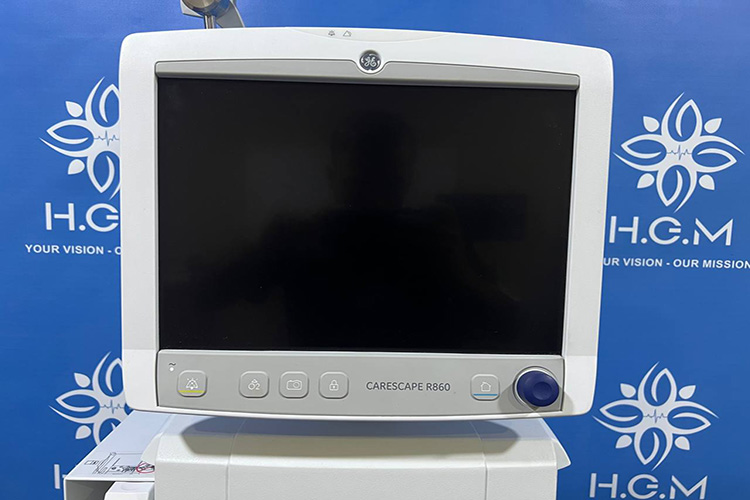
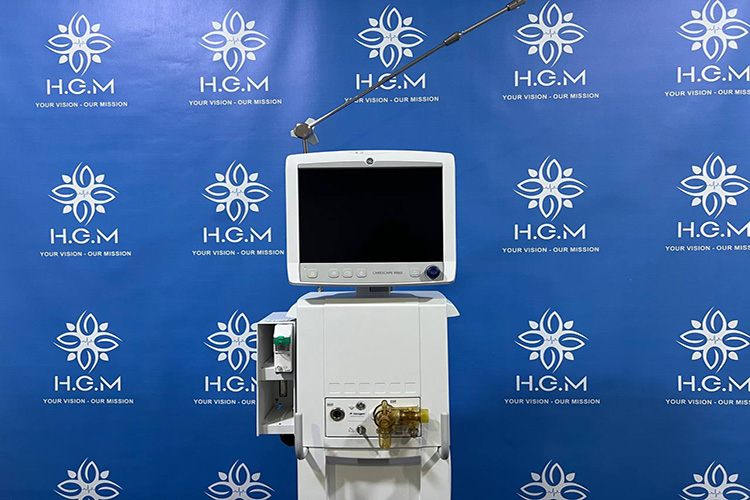
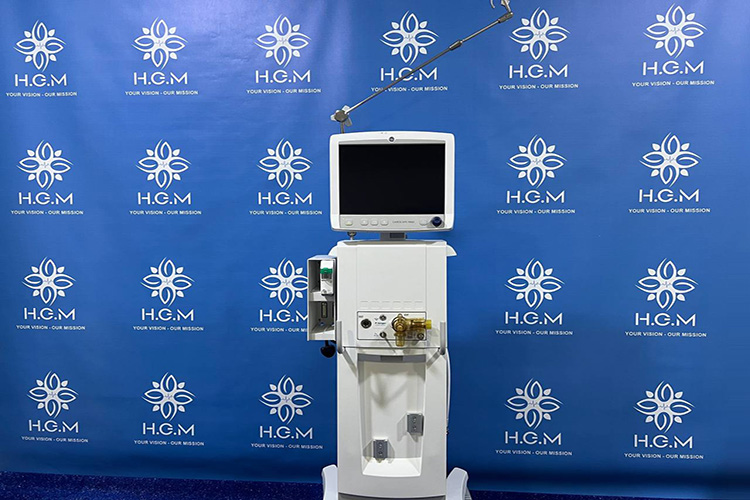
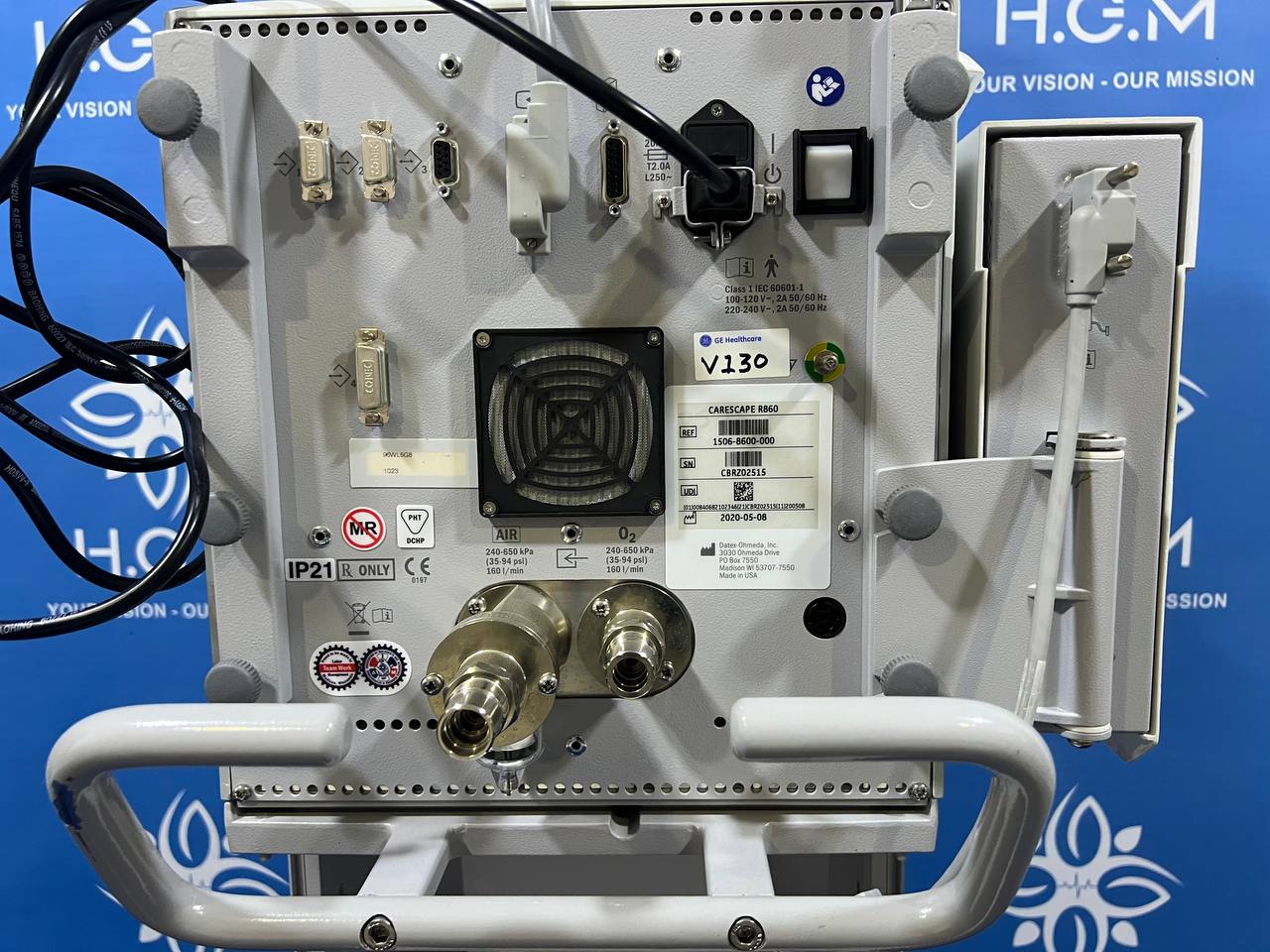
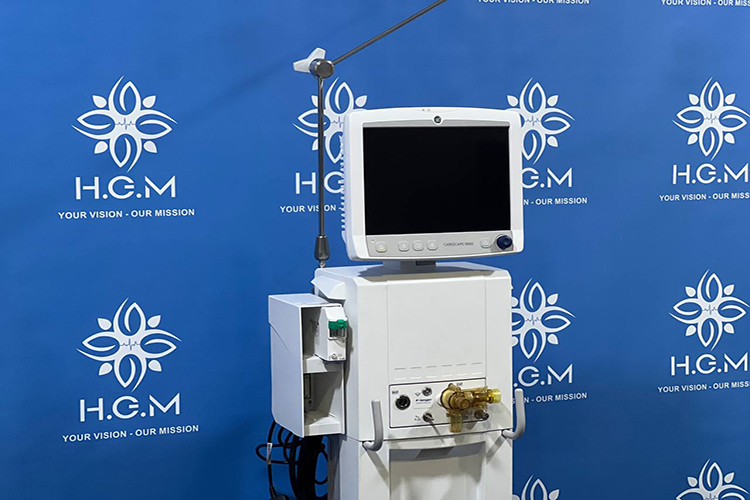
CARESCAPE R860
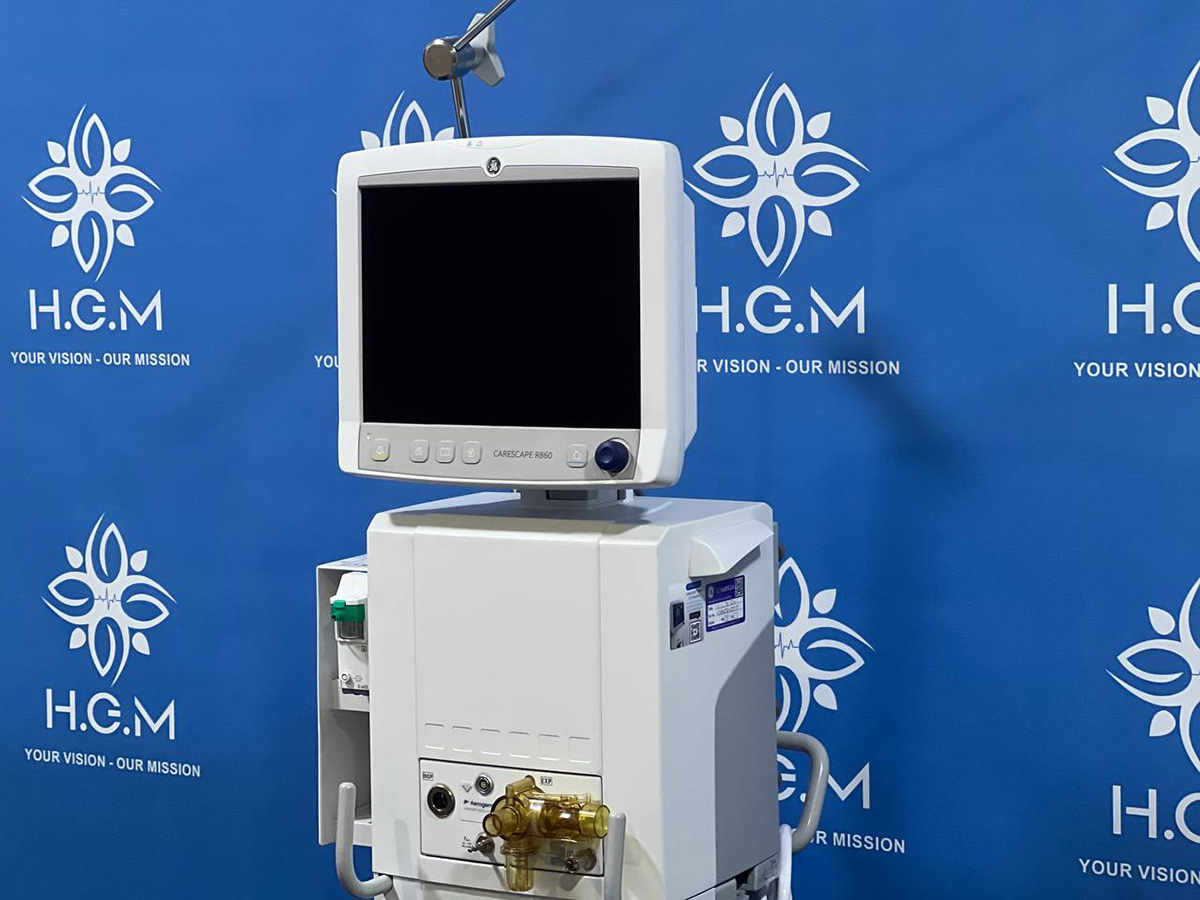
Of course. The CARESCAPE R860 is a critical care ventilator from GE HealthCare (now part of GE HealthCare). It is designed to provide invasive and non-invasive ventilatory support for a wide range of patients, from neonates to adults, in the ICU setting.
Here is a comprehensive overview of its key features, capabilities, and target users.
High-Level Overview
The CARESCAPE R860 is known for its advanced lung protection tools, extensive monitoring capabilities, and integration with the wider CARESCAPE patient monitoring ecosystem. It's often described as an "all-in-one" workhorse for the ICU, capable of handling the most complex and critically ill patients.
Key Features and Capabilities
1. Advanced Lung Protection
This is a core strength of the R860. It is engineered to minimize the risk of Ventilator-Induced Lung Injury (VILI).
P/V Tool (Pressure-Volume Loop): Allows clinicians to visually set the optimal PEEP and tidal volume by identifying the lower and upper inflection points of the pressure-volume curve.
OGD (Optimal Grinding Tool): A unique feature that helps find the ideal balance between oxygenation and ventilation, suggesting the "least negative" combination of PEEP and FiO₂.
APRV (Airway Pressure Release Ventilation): An advanced mode for managing severe ARDS (Acute Respiratory Distress Syndrome) that helps keep alveoli open and recruit lung tissue.
Automated Leak Compensation: Robustly manages leaks during non-invasive ventilation (NIV), making NIV more effective and comfortable for the patient.
2. Comprehensive Ventilation Modes
It offers a full suite of modes to support various patient needs and pathologies:
Basic Modes: Volume Control, Pressure Control, SIMV.
Advanced Spontaneous Modes: Proportional Assist Ventilation (PAV+), Neurally Adjusted Ventilatory Assist (NAVA).
Specialized Modes: APRV (Bi-Vent), High Flow Nasal Cannula (HFNC) capability, and Intelligent Ventilation modes that automate weaning assessments.
3. Extensive Monitoring and Diagnostics
The R860 goes beyond basic parameters to provide deep insights into patient physiology.
Advanced Lung Mechanics: Monitors Resistance, Compliance, and Time Constant.
Work of Breathing (WOB): Measures both patient and ventilator work of breathing, crucial for weaning.
Edi Monitoring (for NAVA): When used with a special catheter, it can monitor the Electrical activity of the Diaphragm (Edi), which drives the NAVA mode for ultra-synchronized ventilation.
Integrated Capnography: Can measure and display end-tidal CO₂ (EtCO₂).
4. Seamless Ecosystem Integration
As part of the CARESCAPE portfolio, it integrates seamlessly with other GE monitors.
One-Patient Connection: The ventilator can connect to a CARESCAPE monitor (like the Bx50 or Bx50) to display all ventilator parameters and waveforms alongside the patient's ECG, SpO₂, blood pressure, and other vital signs on a single, unified screen. This reduces clinical clutter and improves situational awareness.
5. Neonatal to Adult Capability
It is a true universal ventilator, equipped with specific circuits, sensors, and modes to safely and accurately ventilate the tiniest neonates (as low as 0.2 kg) up to adult patients.
Primary Users and Clinical Applications
Users: Critical Care Physicians, Respiratory Therapists, ICU Nurses.
Applications:
Medical and Surgical ICUs
Neonatal and Pediatric ICUs (NICU/PICU)
Transport within the hospital (e.g., between ICU and OR or for scans)
Managing patients with severe respiratory failure (e.g., ARDS, COPD exacerbation)
Long-term weaning from mechanical ventilation
Pros and Cons
| Pros | Cons |
|---|---|
| Excellent lung protection tools (P/V Tool, OGD) for managing fragile lungs. | High cost – it is a premium, high-end ventilator. |
| Extensive monitoring and data for making informed clinical decisions. | Steep learning curve – the sheer number of features and options can be overwhelming for new users. |
| True universal capability from neonate to adult. | Size and weight – it is less portable than dedicated transport ventilators. |
| Superior NIV performance with advanced leak compensation. | |
| Seamless integration with the CARESCAPE monitoring ecosystem. |
Summary
The CARESCAPE R860 is a top-tier, feature-rich critical care ventilator designed for the most demanding ICU environments. Its primary strengths lie in its sophisticated suite of lung protection strategies and its ability to provide a comprehensive, integrated view of the patient's respiratory and overall status. It is a powerful tool for clinicians dedicated to providing advanced, lung-protective mechanical ventilation across the entire age spectrum.