Anesthesia-device-GE-Carestation-650
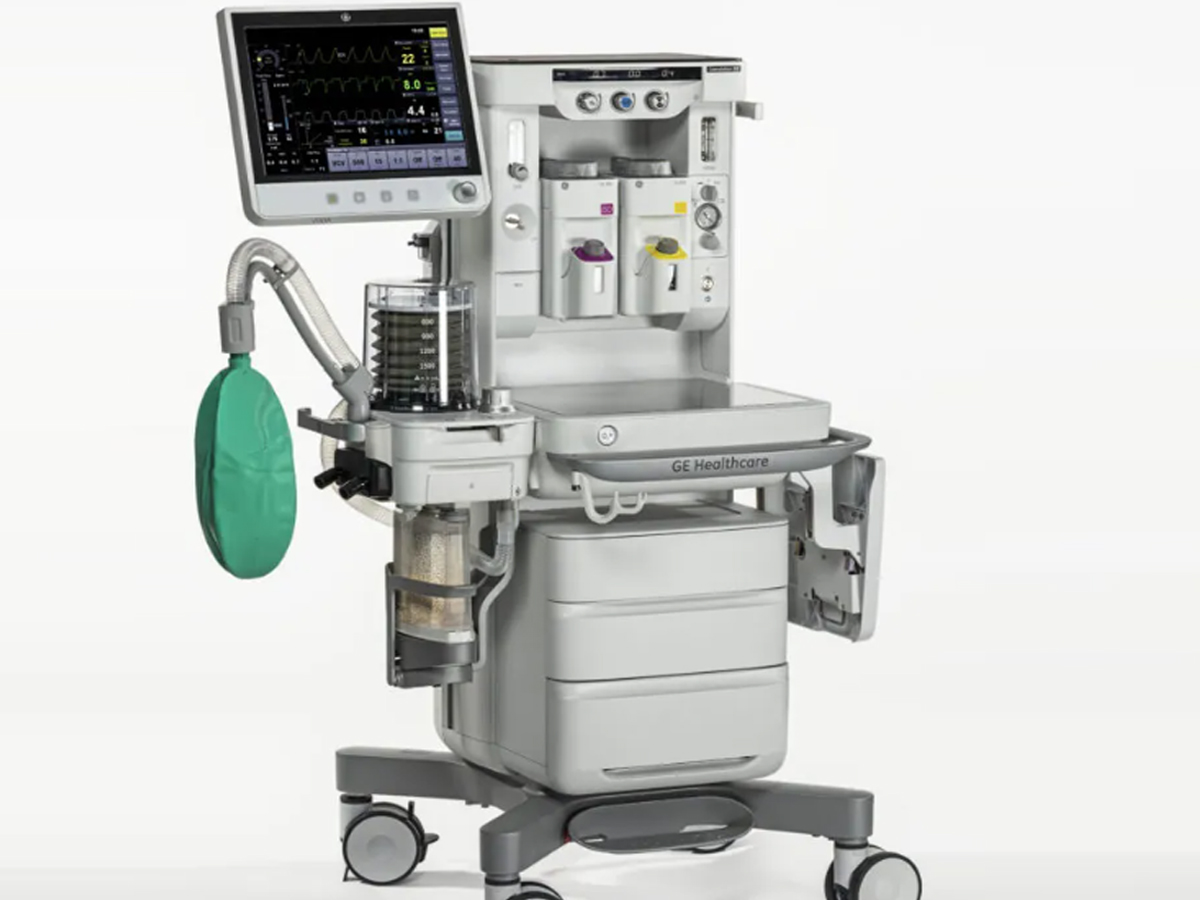
The GE Healthcare CareStation™ 650 is a high-end anesthesia delivery system designed for adult, pediatric, and neonatal patients, integrating advanced ventilation, monitoring, and anesthesia agent delivery. Below is a detailed breakdown of its features, specifications, and clinical applications:
1. Overview of GE CareStation 650
Type: Anesthesia workstation with integrated ventilator and monitoring.
Patient Population:
Adults
Pediatrics (including infants)
Neonates (with appropriate settings and accessories)
Key Components:
Anesthesia vaporizer (for sevoflurane, isoflurane, desflurane).
Integrated ventilator (with multiple advanced modes).
Advanced monitoring (EtCO₂, SpO₂, hemodynamics, gas analysis).
Touchscreen interface with customizable views.
2. Ventilation Modes & Capabilities
The CareStation 650 offers both volume and pressure-controlled ventilation, suitable for different patient sizes:
Adult & Pediatric Modes
Volume Control (VCV)
Pressure Control (PCV)
Pressure Support (PSV)
Synchronized Intermittent Mandatory Ventilation (SIMV)
Manual/Spontaneous Ventilation
Neonatal & Infant Modes
Pressure Control Ventilation (PCV) – Preferred for neonates due to better control over peak pressures.
Volume Guarantee (VG) Mode – Ensures minimum tidal volume while limiting pressure.
Low-Flow Anesthesia & Leak Compensation – Useful for small patients.
Adjustable Trigger Sensitivity – Helps with weak inspiratory efforts in neonates.
Special Features for Neonates
Tidal volumes as low as 20 mL (with appropriate circuit).
Compatible with neonatal breathing circuits (low dead space).
Integrated apnea backup ventilation.
3. Neonatal & Pediatric Considerations
Minimum Weight: Can be used for neonates ≥1 kg (with proper settings).
Flow Sensors: High-precision sensors for accurate small tidal volumes.
Leak Compensation: Adjusts for uncuffed ET tubes in infants.
Limitations:
Not a substitute for a dedicated NICU ventilator (lacks high-frequency modes).
Requires careful setup to avoid barotrauma in preterm neonates.
4. Monitoring & Safety Features
Integrated Gas Monitoring (O₂, CO₂, anesthetic agents).
Advanced Airway Pressure Monitoring (PEEP, PIP, compliance).
SpO₂ & NIBP (non-invasive blood pressure).
Alarms (apnea, high/low pressure, gas failure).
Battery Backup (~60 min for critical functions).
5. Comparison with Other Anesthesia Machines
| Feature | GE CareStation 650 | Drager Apollo | Datex-Ohmeda Aisys |
|---|---|---|---|
| Neonatal Support | Yes (≥1 kg) | Yes (≥0.5 kg) | Yes (≥2 kg) |
| Volume Guarantee (VG) | Yes | Yes | Yes |
| Integrated Gas Analysis | Yes | Yes | Yes |
| Touchscreen Interface | Yes | Yes | Yes |
| High-Frequency Ventilation | No | No | No |
6. Clinical Applications
General Anesthesia (adults, pediatrics, neonates).
ICU Ventilation (if used as a backup ventilator).
Procedural Sedation (with spontaneous breathing modes).
Best For:
OR anesthesia for all age groups.
Larger neonates & infants (with proper settings).
Not ideal for extreme prematurity (<1 kg) or HFOV needs.
7. Key Limitations
No high-frequency oscillatory ventilation (HFOV).
Not a dedicated NICU ventilator (better options: Drager VN500, Babylog VN600).
User-dependent neonatal settings (risk of volutrauma if not properly adjusted).
Conclusion
The GE CareStation 650 is a versatile anesthesia machine capable of supporting neonates ≥1 kg, pediatrics, and adults with advanced ventilation and monitoring. However, for extremely premature infants (<1 kg) or specialized NICU ventilation, a dedicated neonatal ventilator is preferred.